up to data Blog
Discover
Innovation Impulses
and
Latest Insights
up to data Blog
Discover Innovation Impulses
and Latest Insights

Explore how advanced technology is reshaping clinical trial data management.
The up to data blog examines industry trends in laboratory technology, artificial intelligence, data automation, research efficiency, and quality improvement. Follow insights on how emerging technologies are driving precision medicine forward and shortening the pathway from research to effective therapies.
-
 Perspectives
The Interim Decides: Why Clinical Trial Data Cleanliness Cannot Wait for the Final Readout
10/29/2026Blog The Interim Decides: Why Clinical Trial Data Cleanliness Cannot Wait for the Final Readout BMS, argenx, and BioNTech show that the fate of a clinical program is increasingly decided at the interim analysis, not the final readout. For bioanalytical labs and CROs, that means data has to be clean on the day of the… -
 Knowledge
One Study. Multiple Systems. Countless Copies.
10/30/2026Blog One Study. Multiple Systems. Countless Copies: Why an Analytical LIMS Does Not Solve Data Integrity in Bioanalysis A bioanalytical study does not begin when the first sample is logged into a system. It begins weeks earlier — with a shipment manifest, a storage plan, and booked instruments. And it does not end when the… -
Knowledge
The Invisible Compliance Abyss: The Bioanalytical Data Integrity Risk in Every Spreadsheet—and How StudyLab Restores Complete Control
09/17/2026Blog The Invisible Compliance Abyss: The Bioanalytical Data Integrity Risk in Every Spreadsheet—and How StudyLab Restores Complete Control In an era of harmonized global standards like ICH M10, using standalone spreadsheets to manage bioanalytical study data poses a critical risk to drug approvals and laboratory survival. Real-world regulatory suspensions show that manual workflows often can… -
Knowledge
Stop the Copy–Paste–Verify–Repeat Loop in GxP Bioanalytical Reporting
08/13/2026Blog Stop the Copy–Paste–Verify–Repeat Loop in GxP Bioanalytical Reporting Every regulated report begins the same way: you gather the data, enter it into a spreadsheet, transfer it to a document, verify it, and have someone else verify it again. Whenever there’s a change, this cycle repeats. In the second episode of our Expert Coffee Break… -
Knowledge
Mitigating the Risks of Non-Digital Study Reporting: What Bioanalytical Labs Need to Know
08/07/2026Blog Mitigating the Risks of Non-Digital Study Reporting: What Bioanalytical Labs Need to Know In a regulated bioanalytical lab, a study report is only as trustworthy as the process behind it. Yet many CRO–sponsor partnerships still assemble their reports by hand — moving data across spreadsheets, Word templates, and, in the worst case, paper. In… -
Knowledge
Long-term Study Archiving After Watson LIMS™: Key Insights for Regulated Bioanalytical Labs
08/04/2026Blog Long-term Study Archiving After Watson LIMS™: Key Insights for Regulated Bioanalytical Labs In a regulated bioanalytical lab, the work doesn’t end when a study is finalized — the data has to stay complete, retrievable, and compliant for many years to come. A recent up to data Expert Coffee Break brought together CEO Norbert Bittner… -
Knowledge
The Post-Merger Watson™ Problem: How to Phase Out Watson LIMS™ Cost-Effectively
05/07/2026Blog The Post-Merger Watson LIMS™ Problem: A Cost-Effective Path to Decommissioning A CFO/CIO guide to decommissioning legacy bioanalytical LIMS without compliance risk. Post-merger application rationalization moves quickly until it hits a GxP-regulated system. Both sides of a pharmaceutical M&A often run Watson™ LIMS, and neither environment appears safe to decommission without creating a compliance gap…. -
Knowledge
Long-Term Retention of Bioanalytival Watson LIMS studies: A Compliance-First Perspective
05/07/2026Blog Long-Term Retention of Bioanalytical Watson LIMS™ Studies: A Compliance-First Perspective Most bioanalytical labs running Watson LIMS™ have never made a conscious decision about archiving. They have simply deferred. What 21 CFR Part 11 and EU GMP Annex 11 actually require, and why format independence is a regulatory posture, not an IT preference. Executive Summary The majority… -
 Knowledge
Four Dimensions of Time Savings in GxP Bioanalytical Study Reporting
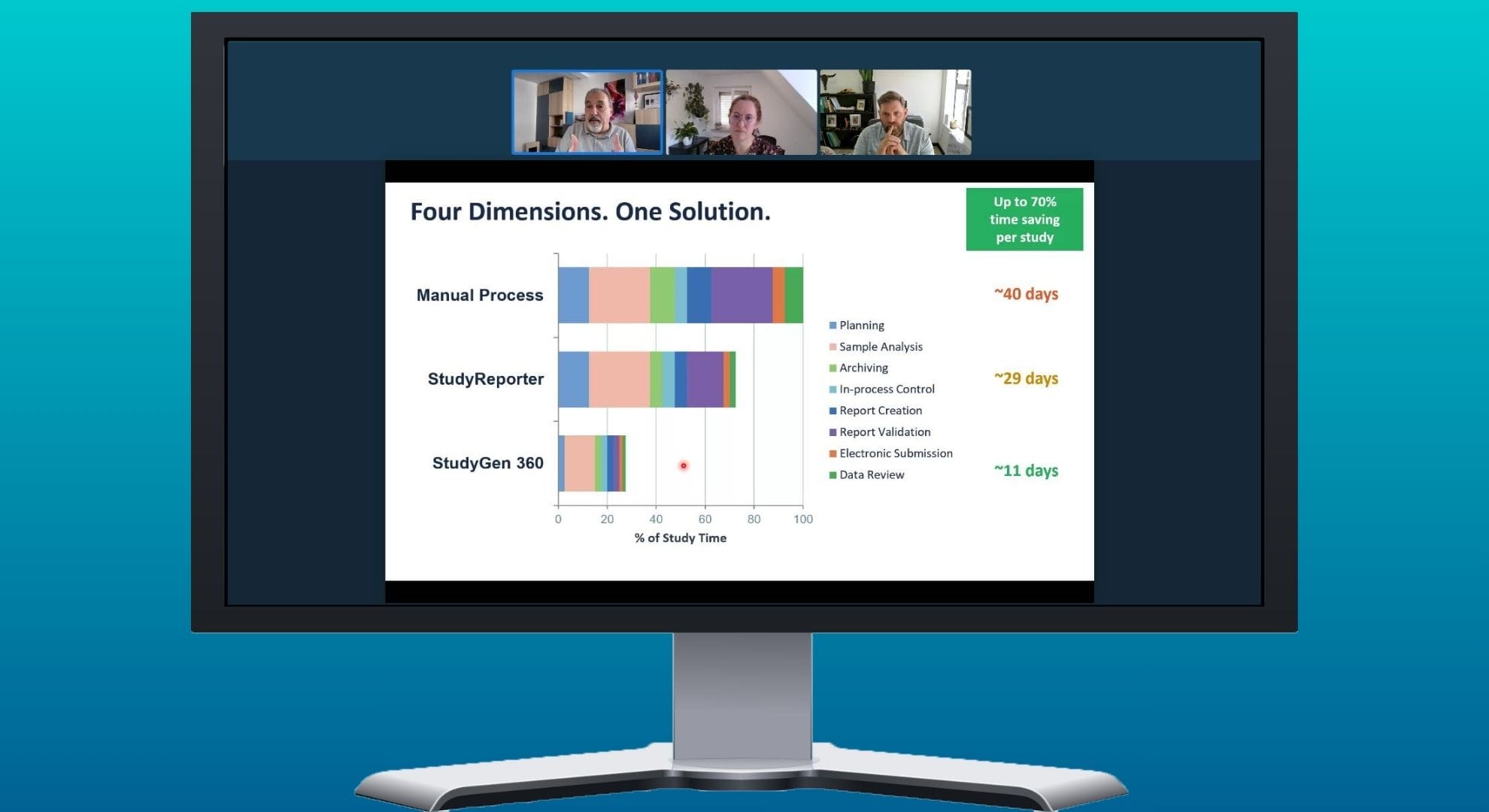
04/16/2026Blog Four Dimensions of Time Savings in GxP Bioanalytical Study Reporting With rising expectations under ICH M10, FDA Part 11, and EMA guidelines, bioanalytical labs face growing pressure: more data, more documentation, and less room for error. Manual reporting still risks transcription mistakes, slows QC cycles, and complicates inspection readiness.This article highlights four dimensions where automation drives measurable… -
Knowledge
Beyond Manual Reporting: A Sneak Peek into the Future of Automated Study Data Reporting
03/13/2026Blog Beyond Manual Reporting: A Sneak Peek into the Future of Automated Study Data Reporting Discover in our exclusive sneak peek video how StudyReporter automates the creation of GxP-compliant study reports and reduces manual effort by up to 70%. Develop your study reporting workflow from source to submission—efficiently, securely, and with maximum data integrity. Watch…